Archive for the 'Nature' Category

ID Quiz 1.3: Milkweed Butterflies

Marty May 1st, 2008

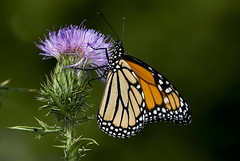
For part 3 of my ID series, I’m going to look at what are arguably the most well-known butterflies in the U.S. - the Monarch (Danaus plexippus) and related species. I call them the ‘royal butterflies’ - Monarch, Queen (Danaus gilippus), Soldier (Danaus eresimus) and, although technically they are in a completely different genus, Viceroy (Limenitis archippus). Continue Reading »

Presenting…

Marty April 28th, 2008

Presenting...

I went out looking for migrant birds Saturday - because I just needed to get out of the house and away from work, although the weather wasn’t helping much (overcast and spritzing). But I did get to see some cool birds at Palmyra Cove, including a lifelist worm-eating warbler. Continue Reading »

ID Quiz 1.2: Sulphurs

Marty April 16th, 2008

Some of the most common butterflies in this area are the sulphurs, part of the family Pieridae, which includes most white and yellow butterflies. In the tri-state area, most of the sulphurs (sub-family Coliadinae) are members of four genuses: Colias (Orange Sulphur, Clouded Sulphur, Pink-Edged Sulphur); Phoebis (Cloudless Sulphur); Pyrisitia (Little Yellow) and Abaeis (Sleepy Orange). Continue Reading »

ID Quiz 1.1: Polygonia Species

Marty April 14th, 2008

Some of the most interesting butterflies in these parts are the various species of the genus Polygonia. The two most common species in the NJ-DE-PA area are the Question Mark (Polygonia interrogationis) and Eastern Comma (Polygonia comma) butterflies. Both species are very similar on both the dorsal and lateral faces of their bodies, but with subtle differences. Continue Reading »

Spring Identification - Hard to ID species

Marty April 14th, 2008

With spring approaching, it’s getting to be time for the butterflies and odonata (dragonflies and damselflies) to come out to play. My region - the NJ-DE-PA tri-state area - is a great place for both types of insects, but there are many species that are tough to tell apart unless you know what to look for. I’ve put together some ID lessons to help people identify some of the commonly confused species. Continue Reading »

Georgia on my Mind

Marty April 13th, 2008

Caleb in the Garden Well, we’re back from our trip to see my nephew for his 3rd birthday. I haven’t gotten to see Caleb as much as I might like over the few years of his life, but we’ve been making a more concerted effort to stay in touch and see the little guy. So, for our trip to Georgia, we made an extended vacation that would allow us some time with him and my sister outside of the ‘group’ visits we’ve had (like the beach where there are 8 families, and too little private time). Continue Reading »

NWRA Notice

Marty March 25th, 2008

Late last year, I entered some of my pictures into a contest sponsored by the National Wildlife Refuge Association. I got a notice yesterday that at least one of my photos had been selected as a winner. Continue Reading »

The “Oh Sh!t” Moment

Marty January 17th, 2008

The

Northern Harrier (Circus cyaneus) vs.
Cooper’s Hawk (Accipiter cooperii)

This poor Cooper’s Hawk really didn’t make the proper entrance to Forsythe NWR. Every time we’ve seen him, it’s only a minute or two before one or more Norther Harriers swoop in to give him the ‘what for’. Continue Reading »

2007 Butterflies and Odonata

Marty January 12th, 2008

Although I had a better year of birding than finding butterflies (they were surprisingly absent for most of the year in NJ), it was still fun to see some new butterflies. Texas provided most of the ‘excitement’, but overall I got my lifelist up to 82, and saw 69 species in 2007 alone (including 24 new ones). I had a better year with Odonata: 32 species of dragonfly (16 new) and 16 damselflies (10 new). My lists for the year:

= New species in 2007.

Butterflies and Skippers

    Butterflies (41, 14 new)

  1. American Lady
  2. Common Mestra √
  3. Red Admiral
  4. Red-Spotted Purple
  5. Eastern Comma
  6. Question Mark
  7. Eastern Tailed Blue
  8. Spring Azure
  9. Summer Azure
  10. Common Buckeye
  11. Pearl Crescent
  12. Texan Crescent √
  13. Empress Leilia √
  14. Great Spangled Fritillary
  15. Monarch Butterfly
  16. Mourning Cloak
  17. Variegated Fritillary
  18. Viceroy
  19. Zebra (Heliconian) √
  20. Dusky Blue Groundstreak √
  21. Gray Hairstreak
  22. ‘Northern’ Southern Hairstreak √
  23. Red-Banded Hairstreak
  24. Bordered Patch (Texas) √
  25. Fatal Metalmark √
  26. Carolina Satyr √
  27. Common Wood Nymph √
  28. Little Wood Satyr √
  29. American Snout
  30. Cabbage White Butterfly
  31. Common Sulphur
  32. Falcated Orangetip
  33. Giant Cloudless Sulphur
  34. Little Yellow
  35. Orange Sulphur
  36. Pink-Edged Sulphur √
  37. Black Swallowtail
  38. Eastern Tiger Swallowtail (black)
  39. Giant Swallowtail √
  40. Palomedes Swallowtail
  41. Spicebush Swallowtail

Skippers (28, 10 new)

  1. Broken Dash Skipper
  2. Celia’s Roadside Skipper √
  3. Clouded Skipper
  4. Common Mellana √
  5. Fiery Skipper
  6. Hobomok Skipper √
  7. Laviana Skipper √
  8. Least Skipper
  9. Little Glassywing
  10. Long Dash Skipper
  11. Northern Broken Dash
  12. Peck’s Skipper
  13. Sachem
  14. Salt Marsh Skipper
  15. Silver-spotted Skipper
  16. Tawny-Edged Skipper
  17. Turk’s-cap White Skipper
  18. Whirlabout √
  19. Zabulon Skipper
  20. Brown Longtail Skipper √
  21. Long-tailed Skipper
  22. Teleus Longtail Skipper √
  23. Eufala Skipper √
  24. Funereal Duskywing √
  25. Mazans Scallopwing √
  26. Mimosa Skipper √
  27. Olive-clouded Skipper √
  28. Wild Indigo Duskywing

Odonata

    Dragonflies (32 species, 16 new)

  1. Band-winged Dragonlet √
  2. Little Blue Dragonlet √
  3. Seaside Dragonlet
  4. Blue Dasher
  5. Eastern Amberwing
  6. Common Whitetail
  7. White Corporal √
  8. Calico Pennant √
  9. Four-spotted Pennant
  10. Halloween Pennant
  11. Autumn Meadowhawk
  12. Eastern Pondhawk
  13. Great Meadowhawk √
  14. Variegated Meadowhawk √
  15. Great Blue Skimmer
  16. Needham’s Skimmer √
  17. Painted Skimmer √
  18. Roseate Skimmer √
  19. Slaty Skimmer
  20. Twelve-spotted Skimmer
  21. Widow Skimmer √
  22. Hyacinth Glider √
  23. Wandering Glider
  24. Black Saddlebags
  25. Carolina Saddlebags
  26. Red Saddlebags √
  27. Striped Saddlebags √
  28. Russet-tipped Clubtail
  29. Clamp-tipped Emerald √
  30. Common Sanddragon √
  31. Common Green Darner
  32. Harlequin Darner √

    Damselflies (16 species, 10 new)

  1. Atlantic Bluet √
  2. Blackwater Bluet √
  3. Blue-tipped Dancer √
  4. Familiar Bluet
  5. Orange Bluet √
  6. Blue-ringed Dancer √
  7. Variable Dancer
  8. Citrine Fortail √
  9. Eastern Forktail
  10. Fragile Forktail
  11. Rambur’s Forktail √
  12. Ebony Jewelwing
  13. Common Spreadwing √
  14. Great Spreadwing
  15. Slender Spreadwing √
  16. Spotted Spreadwing √

Sun Pillar

Marty December 5th, 2007

Sun Pillar

This phenomena is known as a sun pillar, and it’s created by the presence of ice crystals in the atmosphere between the sun and the photographer. This is known as a lower pillar because the beam is coming from below the sun (normal pillars rise up from the sun when it has just dropped below the horizon). Continue Reading »

Next »